
Typical project rhythm (targets)
1–2 weeks
diagnosis and tariff feasibility model
2–4 weeks
structure, site and compliance design
2–6 months
incorporation, certification and line build-out
Quarterly
operating reviews and optimisation after start-up
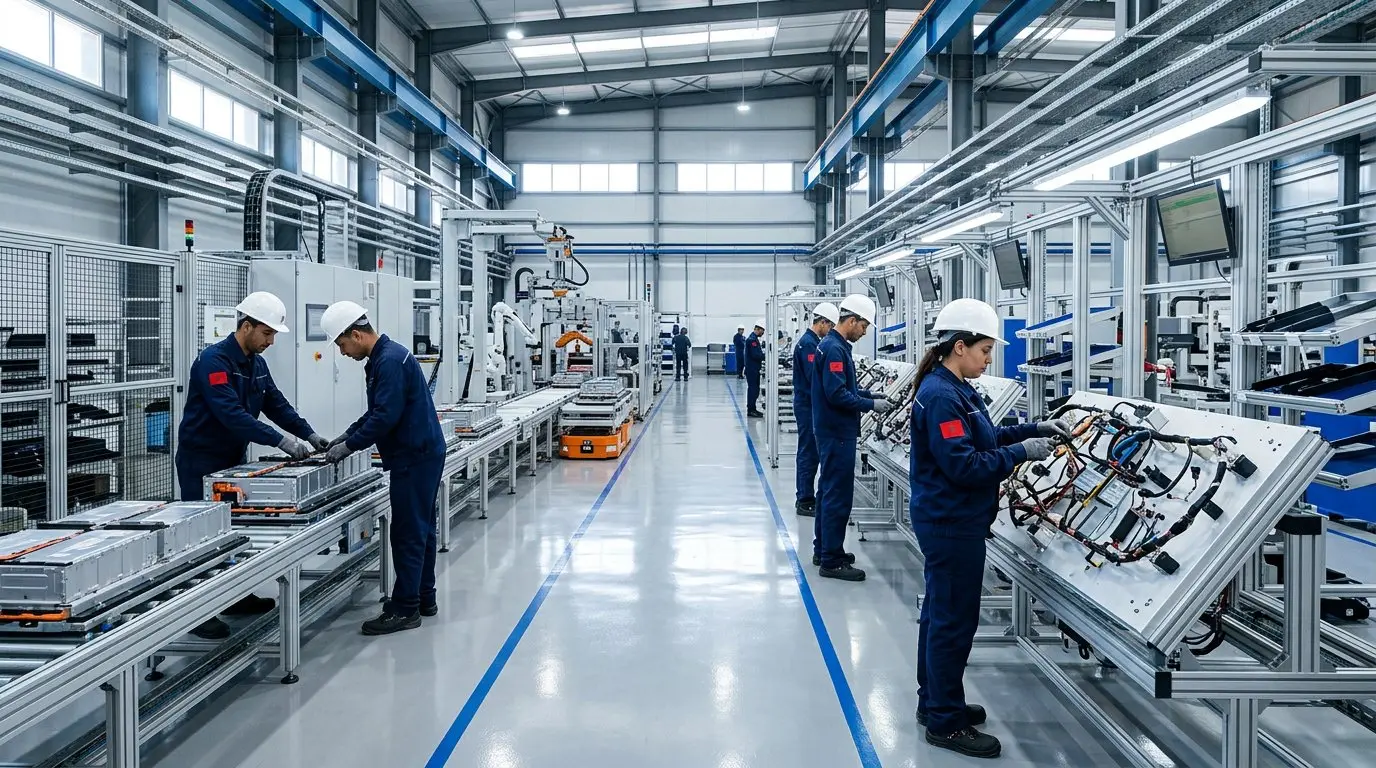
Scenario 01 · New energy
Serving European customers from Moroccan capacity
Typically involves: manufacturing localisation · origin planning · product certification
The usual challenge
Shipping directly from China to Europe means duties and long transit, compressing price and delivery competitiveness, while European customers increasingly expect local capacity and shorter replenishment cycles.
How we usually proceed
First an HS classification and origin model to establish which models can reach EU origin through process changes and local value-added. Then a plant in the Tangier free zone or a local contract manufacturer, covering equipment export, installation, line qualification and customer audits.
Key figures (public sources)
Where origin rules are met, the EU import duty on Moroccan industrial goods is 0%. Sea transit from Tangier to Rotterdam is around 10–15 days. Export-oriented free-zone companies pay no corporate income tax for the first 5 years.
0%
EU duty on industrial goods (origin met)
10–15 days
sea transit, Tangier to Rotterdam
5 years
corporate tax exemption in a free zone
Scenario 02 · Home appliances
Morocco as a North African distribution and after-sales hub
Typically involves: trade agency · distribution warehouse · dealer management
The usual challenge
North and West African markets are often served by many small importers: fragmented pricing, no after-sales, slow inventory turns, and no channel data or brand control for the manufacturer.
How we usually proceed
Establish a distribution and after-sales entity in Casablanca to centralise clearance and inventory, set dealer admission and credit terms, build a spare-parts warehouse and service network, and connect sales data back to head office.
Key figures (public sources)
Transit from Morocco to major North and West African markets runs about 3–10 days by road or sea. Domestic sales carry 20% VAT, which must be priced in; exports and goods used in free zones to produce exports can be zero-rated.
3–10 days
transit from Morocco to North / West Africa
20%
local VAT rate on domestic sales
62
countries with preferential access to Morocco
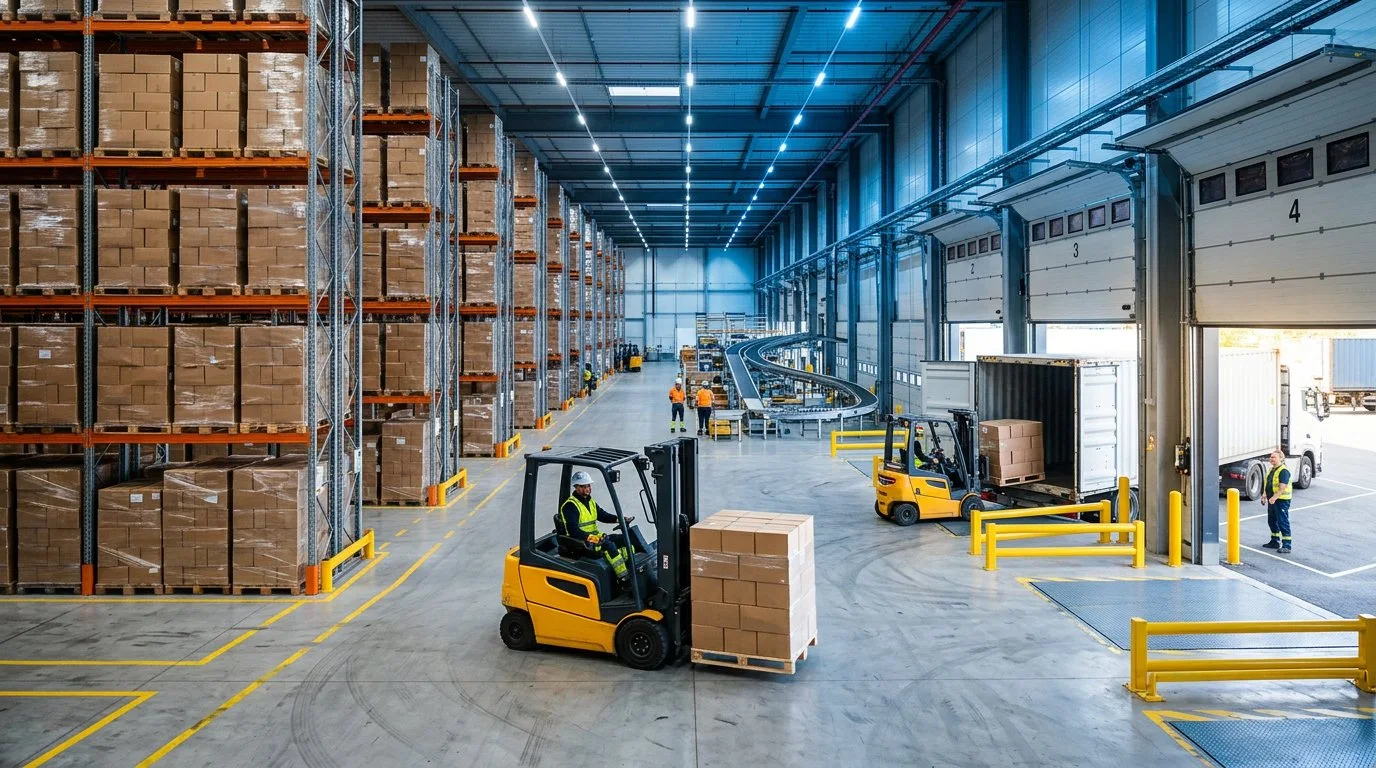

Scenario 03 · Automotive components
Entering the Tangier and Kenitra OEM supply systems
Typically involves: quality systems · JIT supply · local second tier
The usual challenge
Becoming a local supplier to Renault or Stellantis requires IATF 16949 certification, delivery to OEM takt time and gradually rising local content — all verified through on-site audits and series production data.
How we usually proceed
Start with a quality-system gap analysis and close the documentation and shop-floor gaps; locate in or near the OEM supplier park to support JIT delivery; develop local second-tier suppliers to replace imported parts, with bilingual SOPs and shift systems.
Key figures (public sources)
Morocco produced about one million vehicles in 2025, the highest in Africa. The local automotive supplier base exceeds 250 companies, with mature technician supply from the automotive and aerospace industries.
1 million
vehicles produced in Morocco in 2025
250+
companies in the local supplier cluster
IATF 16949
the standard OEM quality requirement
Data and scope
What we cite, and what we do not promise
Sources
Port throughput is taken from the Tanger Med Port Authority and the 2025 Lloyd’s List rankings. Vehicle output and supplier cluster data come from Morocco’s Ministry of Industry and Trade and public industry statistics. Tariff and origin rules follow European Commission legal texts and the US–Morocco FTA. Tax rules follow the published position of the Moroccan tax authorities.
What we do not promise
We do not promise returns, payback periods or approval outcomes for any project. Tariff treatment, incentive amounts and approval timelines must be verified line by line for each product, HS code and transaction structure, and remain subject to the competent authorities’ determination.
Client information
This page contains no client names, contract values or delivered results. Every engagement is covered by an NDA; we disclose no project details before written client authorisation.

 English
 French
 Arabic
 Chinese